













Is the Siskiu T7 a Good Trail Bike for Intermediate Riders? Who It Suits and Who Should Look Elsewhere
This guide looks at whether the Siskiu T7 suits an intermediate rider, covering which riders it fits, who would be better served by a cross-country, enduro or hardtail bike, and the hardtail versus full-suspension decision. It closes with a pre-purchase checklist on geometry, components, sizing and setup.

You've outgrown the "just don't crash" phase. You're linking corners, hitting rootier lines, and starting to notice what your bike can't do. So when a model like the Siskiu T7 pops up in your search, the big question is simple: is it the right trail bike for an intermediate rider, or will you hit its limits fast?
Let's break it down the way you'd size up any trail bike: by what it's built to do, what you actually ride, and where the compromises show up. One heads-up before we start: always check the current spec sheet, geometry chart, and size guide for the exact build you're looking at, since components and details can change between model years.
What "Trail Bike" Really Means for an Intermediate Rider
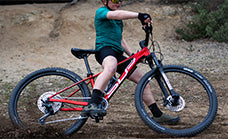
"Trail bike" is a broad label. In general it describes a mountain bike with moderate suspension travel, geometry that balances climbing and descending, and enough toughness for mixed terrain: fire roads, singletrack, rock gardens, and the occasional bike-park lap.
For intermediate riders, the sweet spot usually looks like this:
- Balanced geometry: a slacker head angle than a cross-country race bike for confidence on descents, but not so slack that climbing feels like a chore.
- Reliable, serviceable parts: hydraulic disc brakes, a wide-range drivetrain, and suspension you can tune with a shock pump.
- Room to grow: a frame that still feels capable when your skills jump a level.
That last point matters most when you're watching your budget. The goal is a bike you won't need to replace in a year.
Who the Siskiu T7 Is Likely to Suit
Riders moving up from an entry-level hardtail
If you've been on a basic hardtail and your confidence is outpacing the bike, a purpose-built trail machine is a real upgrade. More capable suspension and trail-oriented geometry make rough sections less punishing and let you carry more speed with more control.
Riders who want one bike for most trails
If your weekends are a mix of climbs, flowy descents, and technical bits, a do-it-all trail bike is the practical choice. You don't need a separate bike for every type of ride, which is exactly the kind of value thinking that keeps costs down.
Budget-minded riders who care about spec per dollar
Direct-to-consumer brands often put more money into components and less into retail markup. If you're comfortable doing basic setup and maintenance yourself (or paying a local shop for a tune-up), that approach can stretch your budget a long way.
Who Should Look Elsewhere
Riders focused on racing or fast, smooth miles
If your riding is mostly smooth singletrack, gravel paths, and long climbs, a lighter cross-country bike will feel quicker and more efficient. A trail bike's extra travel and sturdier build add weight you'll feel on long ascents.
Riders who live at the gnarly end of the spectrum
If your regular rides include steep chutes, big drops, and park laps, you'll probably want a longer-travel enduro or freeride bike with heavier-duty brakes, tires, and suspension. A trail bike can handle the odd rowdy day, but it isn't meant to be punished week after week.
Riders who want zero maintenance
Suspension, hydraulic brakes, and a modern drivetrain all need regular attention. Research on mountain bike injuries points to equipment failure and rider error as contributors to crashes, so staying on top of maintenance is a safety issue as much as a performance one (see the injury epidemiology literature on mountain biking, for example reviews indexed on PubMed). If you'd rather not think about service intervals, a simpler hardtail may fit better.
Very short or very tall riders who haven't checked sizing
Fit makes or breaks a trail bike. Always compare your height and inseam against the manufacturer's size chart and check reach and standover numbers. If you're between sizes, consider how you ride: many trail riders size up for stability, others size down for playfulness.
Hardtail vs. Full Suspension: Decide This First
Before you fixate on any one model, settle the bigger question. A hardtail is lighter, cheaper, and easier to maintain, and it teaches you to pick lines carefully. A full-suspension bike offers more traction, comfort, and control on rough ground, which also reduces fatigue over long rides. Studies comparing the two on rough terrain have generally found that suspension improves comfort and can reduce the vibration your body absorbs, though the efficiency benefits depend on the terrain and the rider.
For most intermediates riding genuinely technical trails, full suspension is where the fun (and the progression) tends to speed up. For riders on a tight budget who ride mostly smoother trails, a quality hardtail can be the smarter buy.
Your Pre-Purchase Checklist
- Check the geometry chart. Look at head angle, reach, and wheelbase, and compare against bikes you've enjoyed.
- Verify the component list. Pay attention to brakes, fork, shock, and drivetrain. These are the parts you'll feel on every ride.
- Confirm your size. Use the manufacturer's chart and, if possible, sit on a similar bike locally.
- Budget for setup. A shock pump, a good helmet, pedals if not included, and a first tune-up are worth planning for.
- Read the return and warranty terms. When buying online, you want to know exactly what's covered.
The Verdict
For an intermediate rider who wants a versatile, capable bike for mixed trails without paying traditional retail prices, a trail-focused model like the Siskiu T7 is a sensible category to shop. It makes the most sense if you ride varied terrain, want room to progress, and are happy to handle basic maintenance. If you mostly race, ride smooth paths, or push into serious downhill territory, you'll likely be happier on a lighter or a longer-travel bike instead. The best trail bike is the one that matches the trails you actually ride, not the ones you hope to ride someday.
Ready to Keep Digging?
Want to compare options? Browse the mountain bike range at BikesOnline US, check the size guide and spec details on the bike you're eyeing, and ride more for less.